Choose a trusted product
Purchase devices, batteries and chargers from a reputable manufacturer or retailer. Be cautious with unusually inexpensive replacement batteries from unknown sellers.

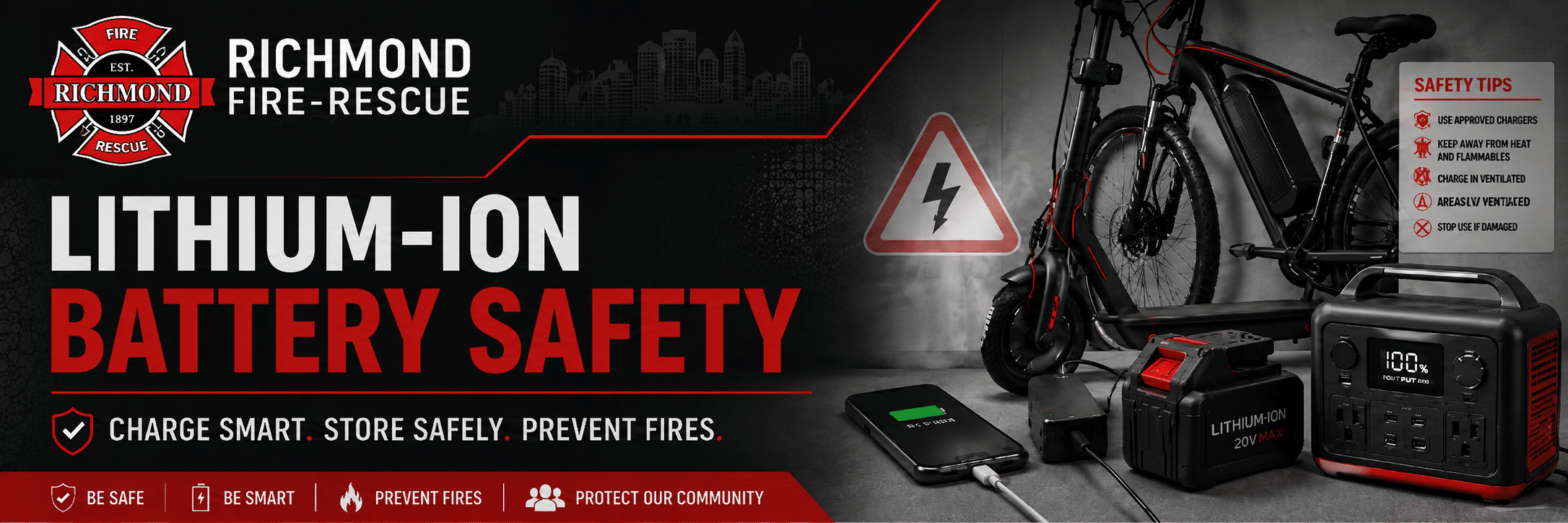
Lithium-ion batteries power many of the devices we use every day. When damaged, improperly charged or paired with the wrong charger, they can overheat and cause a fire.
A few simple habits can help you buy, charge, store and dispose of batteries safely.
Start With Safe Charging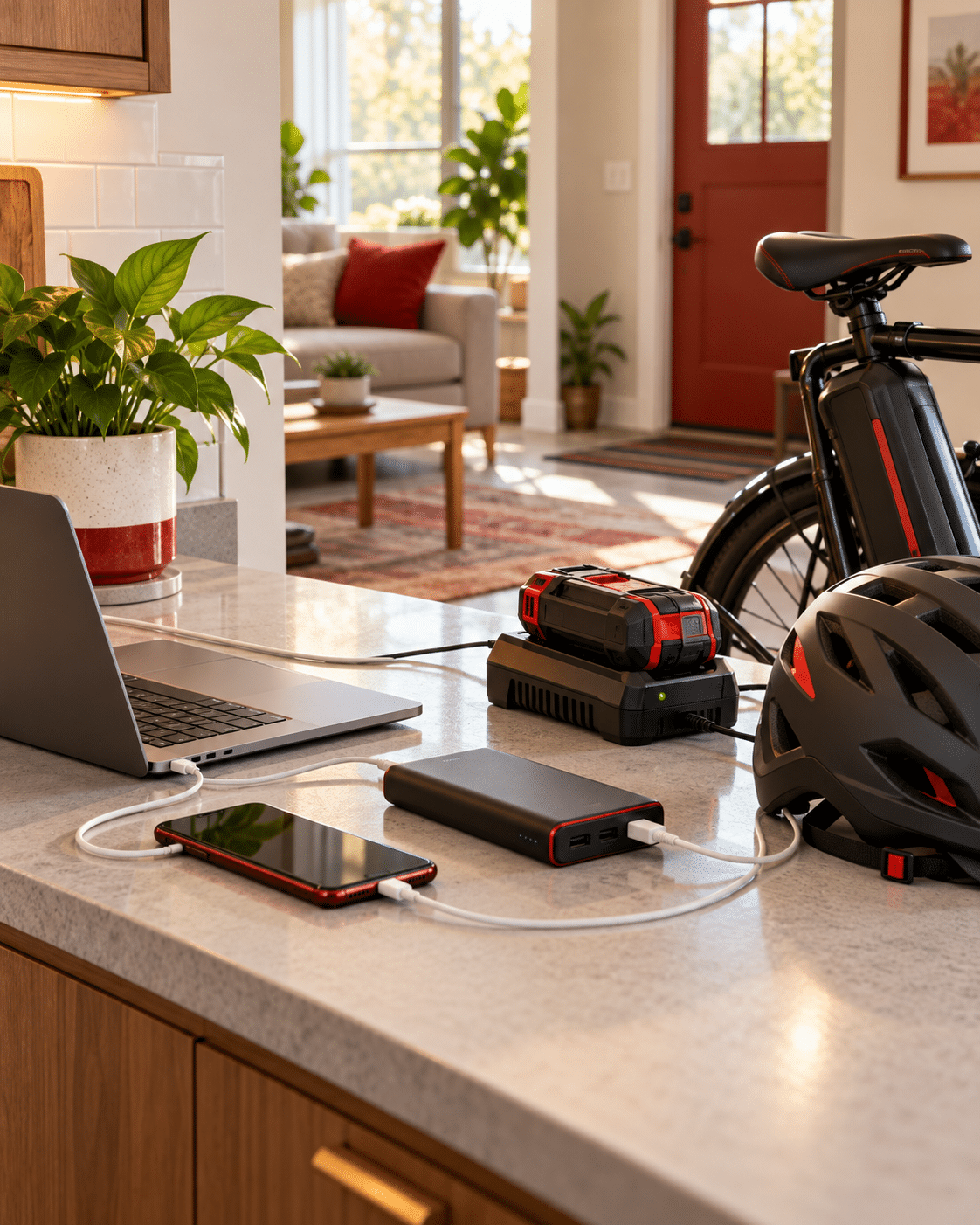
Battery safety begins with the product you purchase. Choose trusted equipment and use batteries, chargers and replacement parts designed to work safely together.
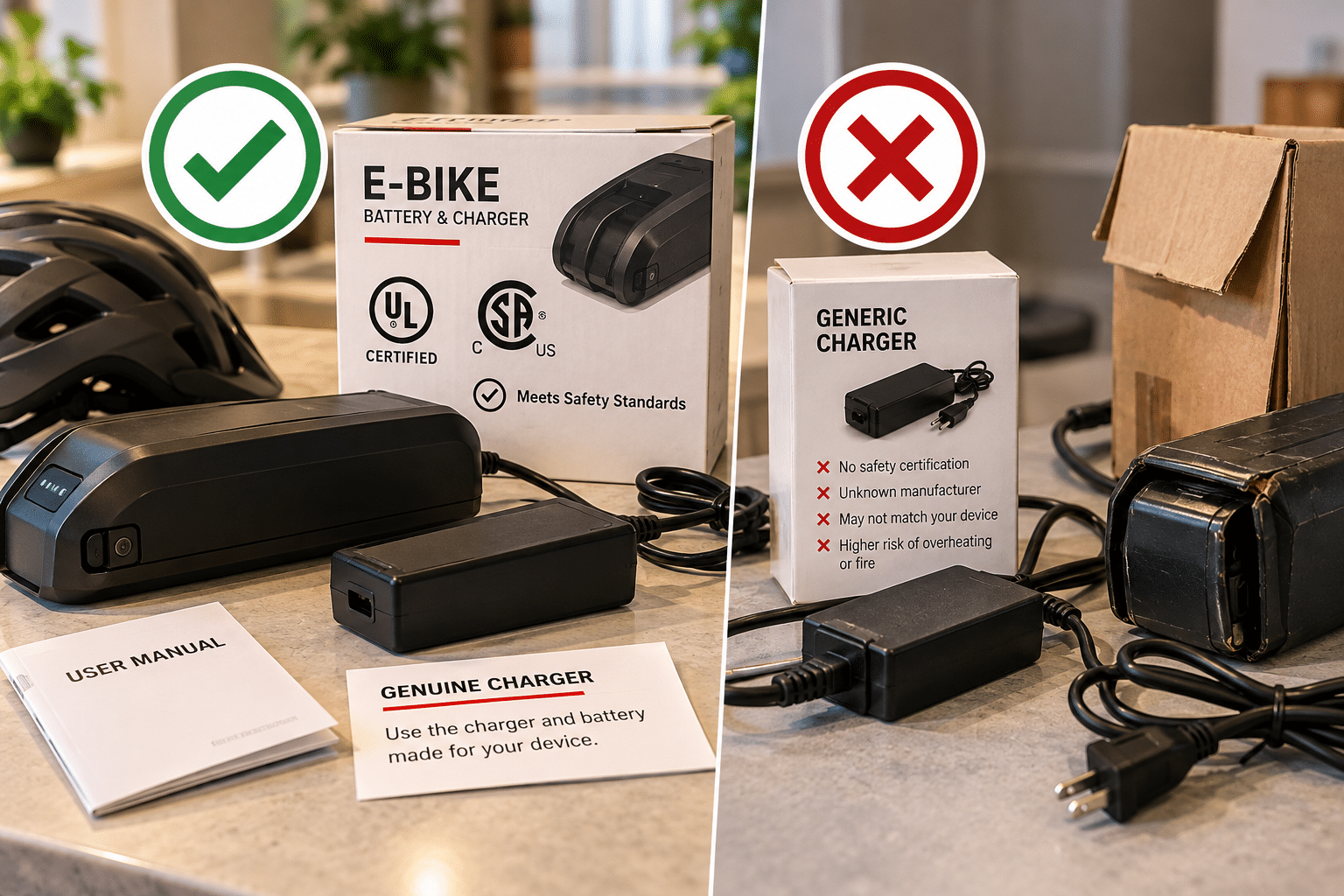
Purchase devices, batteries and chargers from a reputable manufacturer or retailer. Be cautious with unusually inexpensive replacement batteries from unknown sellers.
Use the original battery supplied with the device. When a replacement is needed, contact the product manufacturer or retailer and confirm that the battery is made for your exact model.
Use the charger supplied with the device. A replacement charger must have the correct voltage and current and should be purchased from the manufacturer or another trusted source.
Chargers and other electrical products that plug into an outlet should display a recognized Canadian certification mark. A familiar brand logo alone is not a safety certification.
Lithium-ion batteries should be charged with care. Safe charging habits can help reduce the risk of overheating, battery failure and fire.
Always charge batteries and battery-powered devices on a stable, hard surface where heat can dissipate. Avoid charging on beds, couches, chairs or other soft surfaces.
Do not cover a charging battery or device with pillows, blankets, clothing or other materials that can trap heat.
Avoid charging while you are asleep or away from home. If something changes, you want to notice it quickly.
Use the charging instructions provided for the device and battery. Overcharging or improper use can increase risk.
Once fully charged, disconnect the charger and store it safely.
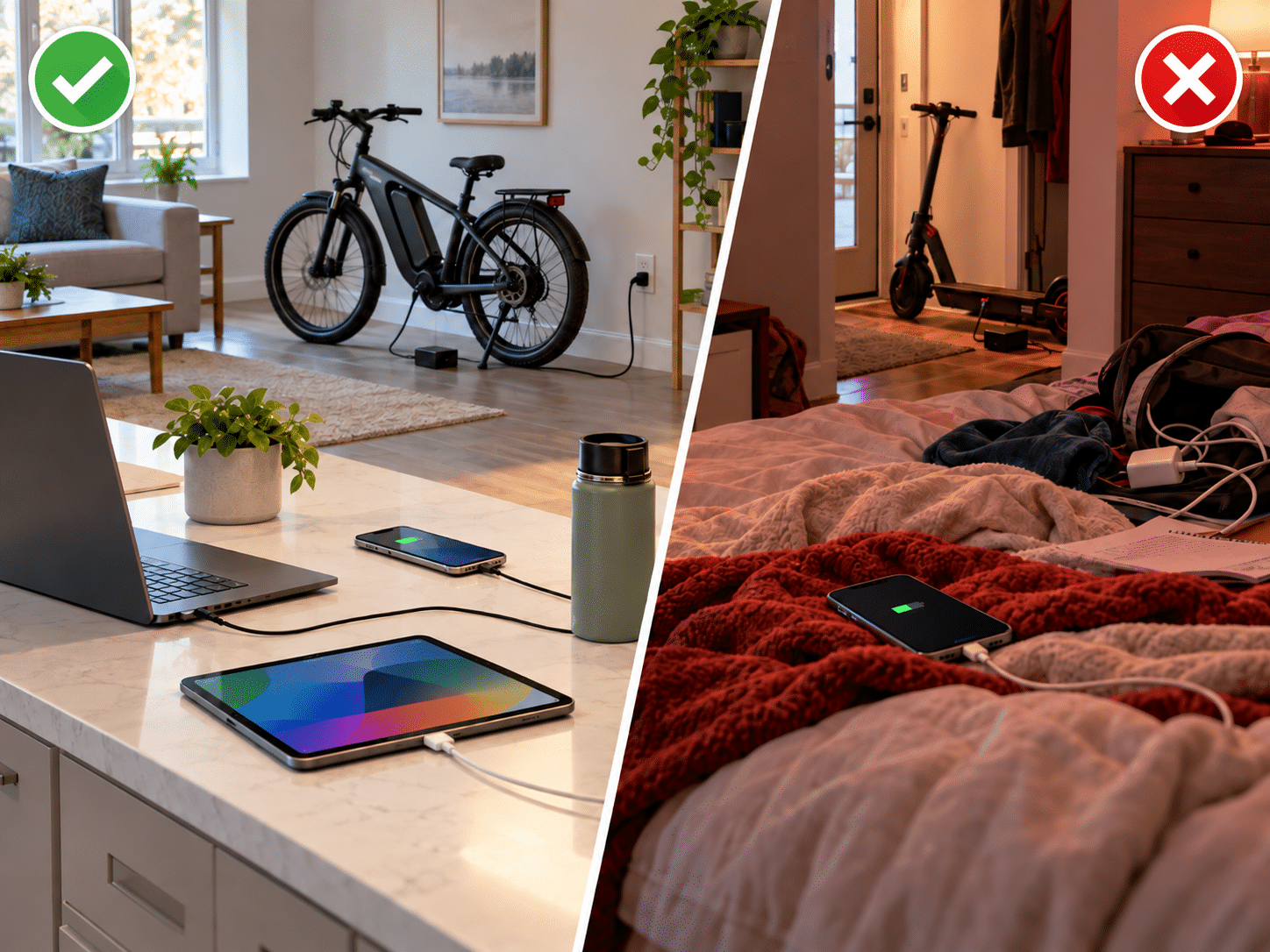
Do not charge e-bikes, e-scooters or other large battery-powered devices in a hallway, stairwell, doorway or other location where they could block your escape during a fire.
A failing lithium-ion battery may show signs of trouble before a fire begins. Stop using the device immediately if you notice any unusual change.
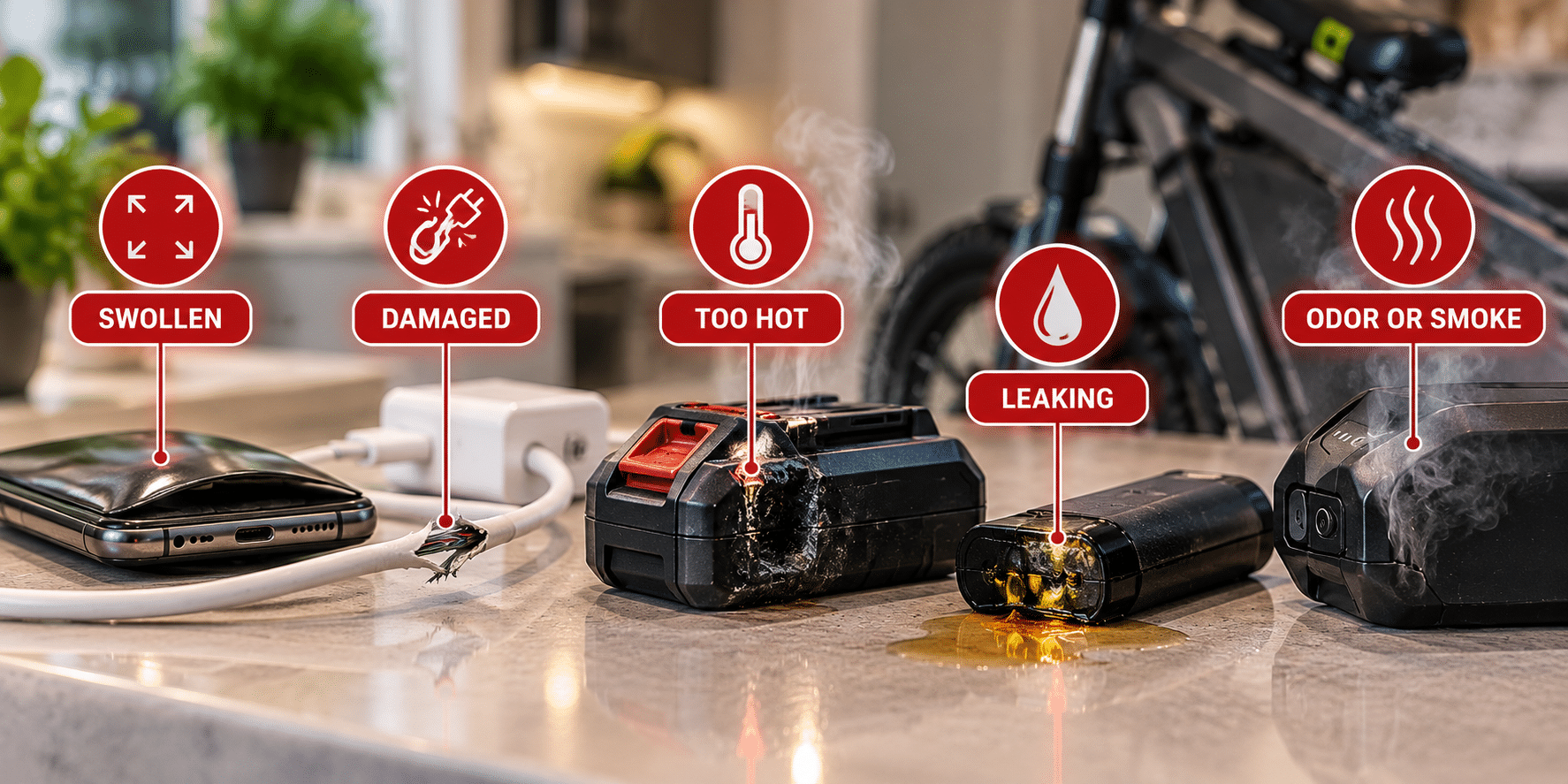
The device, charger or battery feels much hotter than normal or continues getting hotter.
The battery changes shape, expands or causes the device casing to separate or lift.
A strange, sharp or chemical smell comes from the battery, device or charger.
Liquid, residue or staining appears around the battery or inside the device.
You notice burn marks, cracking, dents, punctures, corrosion or an unexpected change in colour.
The battery begins making unusual noises, including crackling, popping or hissing sounds.
E-bikes and e-scooters use larger, more powerful lithium-ion batteries. A problem involving one of these batteries can develop quickly, produce heavy smoke and create a serious fire risk inside a home or shared building.
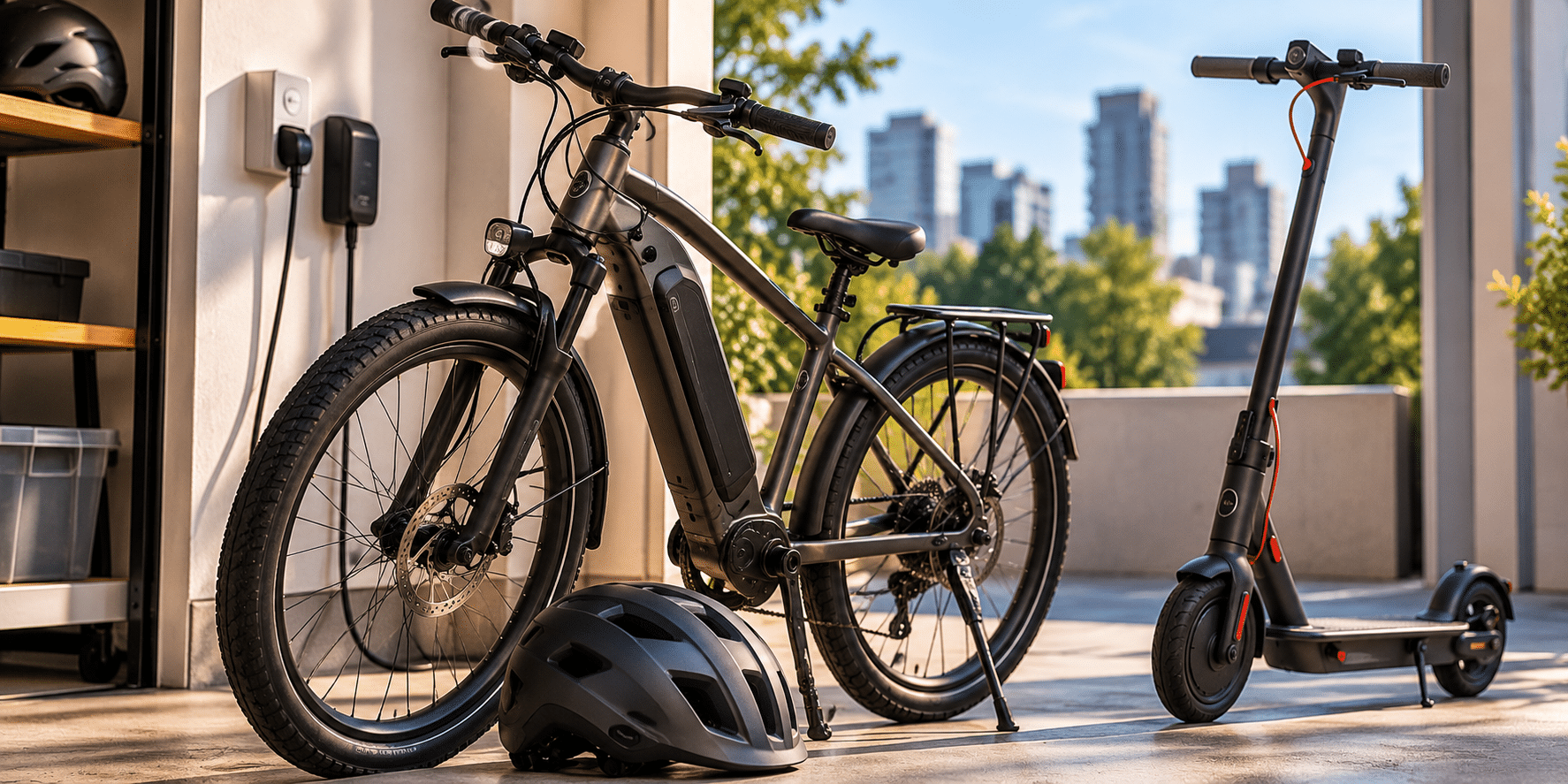
Use the battery and charger supplied with the e-bike or e-scooter. Purchase replacements from the original manufacturer or the retailer where the product was purchased.
Charge at room temperature on a stable surface, away from anything that can burn. Keep the device where it can be seen and where heat can escape.
Keep e-bikes and e-scooters away from exit doors, hallways, stairways and other escape routes while they are charging or being stored.
When purchasing an e-bike or e-scooter, check the product information for recognized safety certification and ask the retailer to confirm which standard applies to the complete electrical system.
Inspect the battery and device carefully before using or charging them again. Do not charge a wet or damaged battery. Follow the manufacturer’s instructions or have the product assessed by an authorized service provider.
Where a battery is kept matters. Choose a cool, dry and protected location where it will not be exposed to heat, moisture, physical damage or materials that can burn.
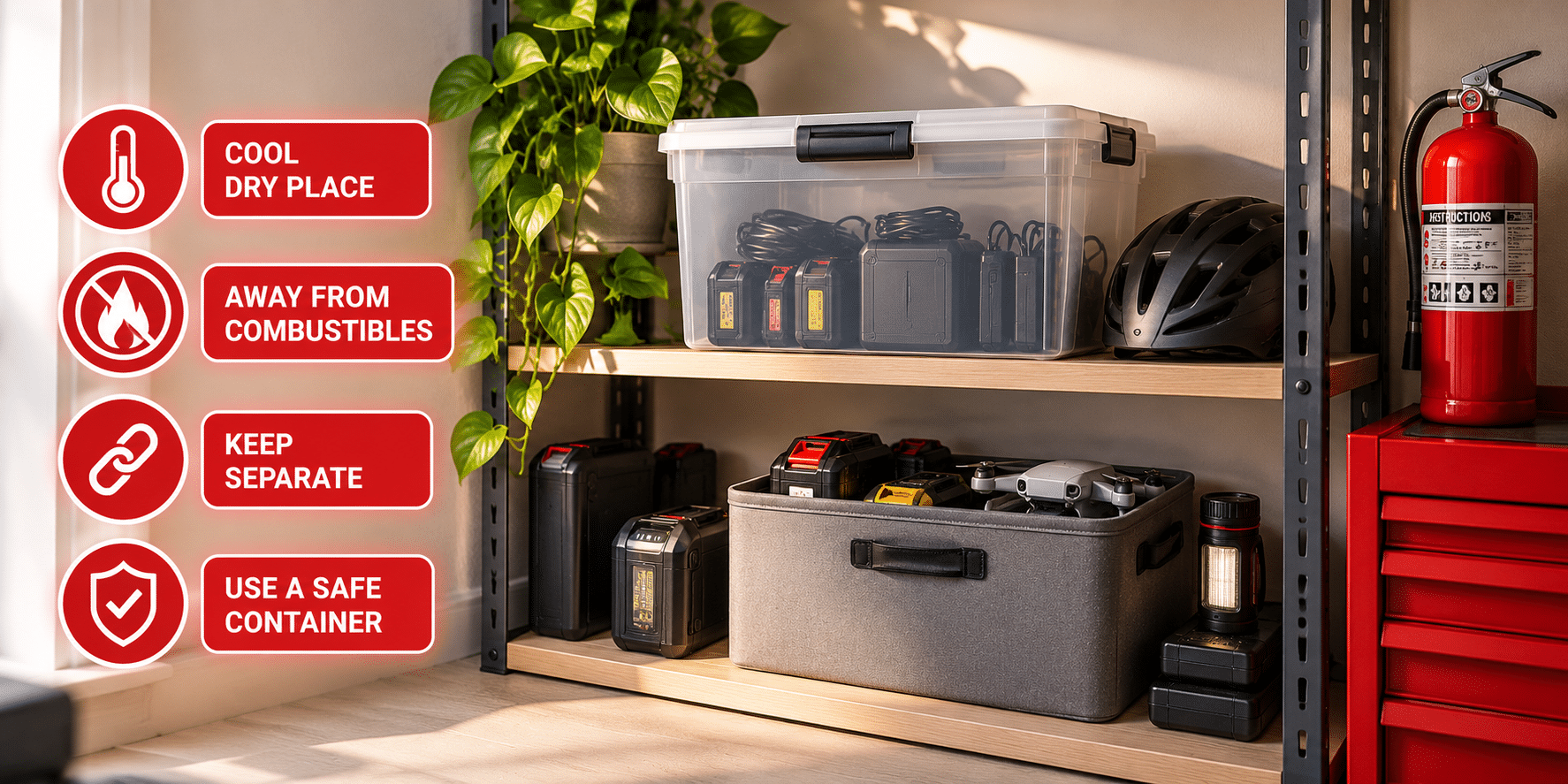
Store batteries indoors and away from direct sunlight, heaters and other sources of heat. Do not leave them inside a hot or freezing vehicle.
Protect batteries from rain, condensation and other moisture. Allow a cold battery to return to room temperature before using or charging it.
Store batteries where they cannot be dropped, crushed, punctured or struck. Never place heavy objects on top of batteries or battery containers.
Stop using batteries that are swollen, dented, punctured, leaking, unusually hot or otherwise damaged. Keep them away from anything that can burn, do not place them with regular batteries and arrange for safe disposal as soon as possible.
A used battery can still contain enough energy to start a fire. Keep lithium-ion batteries out of household garbage and regular recycling, prepare them carefully and take them to an approved drop-off location.
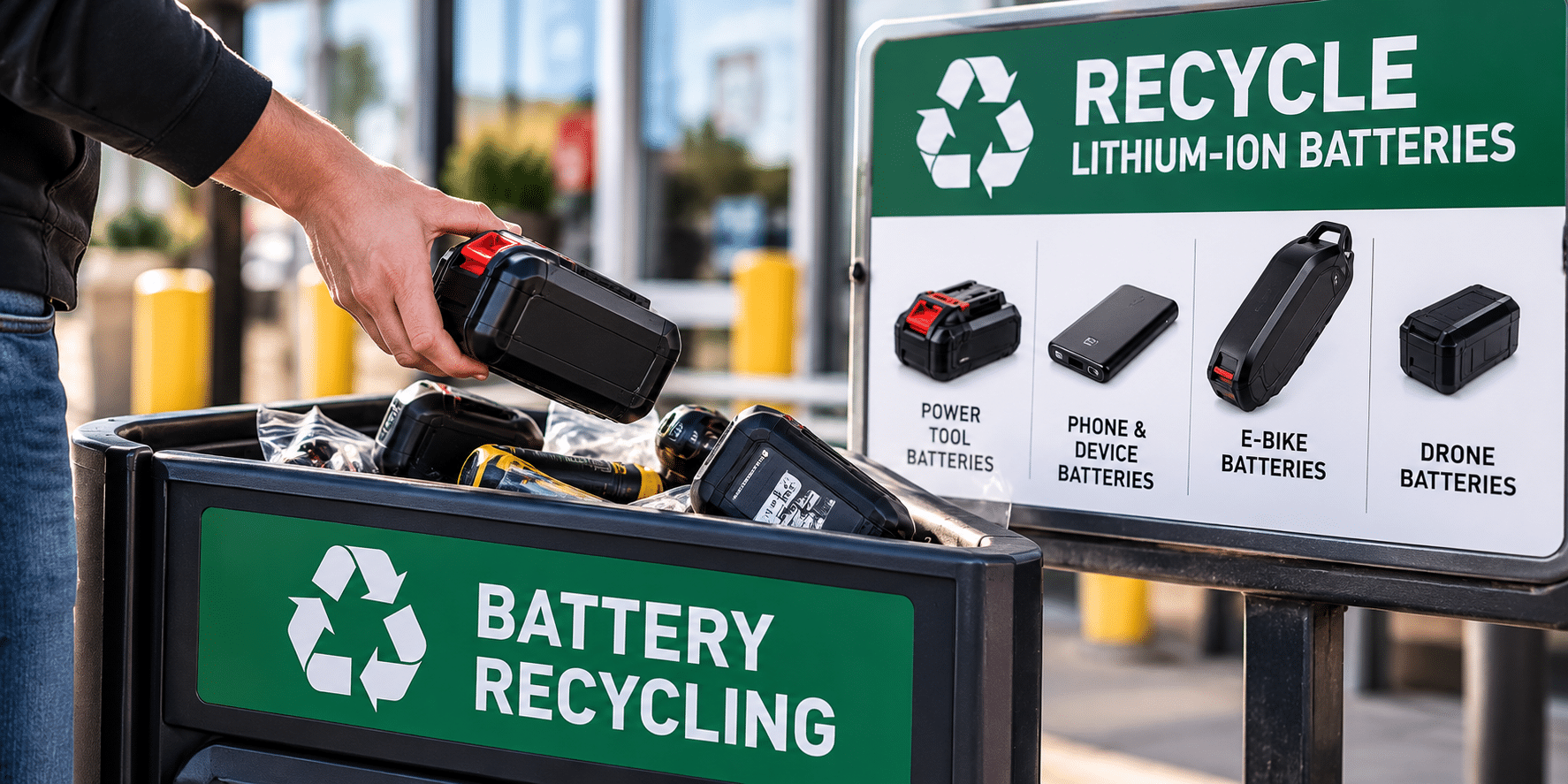
Batteries can be crushed or damaged during collection and processing, creating a fire risk for collection crews, vehicles and facilities.
Do not place batteries in a Blue Box, recycling cart, mixed-paper container or another regular recycling stream.
Never place a battery in a fire, fireplace or burn pile. Heating a battery can cause it to rupture, ignite or explode.
These steps apply to used batteries that are cool, stable and do not show signs of damage.
Follow the manufacturer’s instructions. Do not force, bend, puncture or dismantle a battery to remove it from a device.
Apply non-conductive tape, such as electrical tape, over exposed battery terminals to help prevent a short circuit.
Place each lithium battery in a separate plastic bag or keep it in secure original packaging during transport.
Keep prepared batteries away from children, metal objects and heat, and deliver them to an approved collection location promptly.
The depot accepts lithium-ion batteries, household batteries, cell phones and many electronic products for free drop-off by Richmond residents.
Lithium-ion batteries are part of daily life. A few simple choices can help reduce the risk of overheating, battery failure and fire.
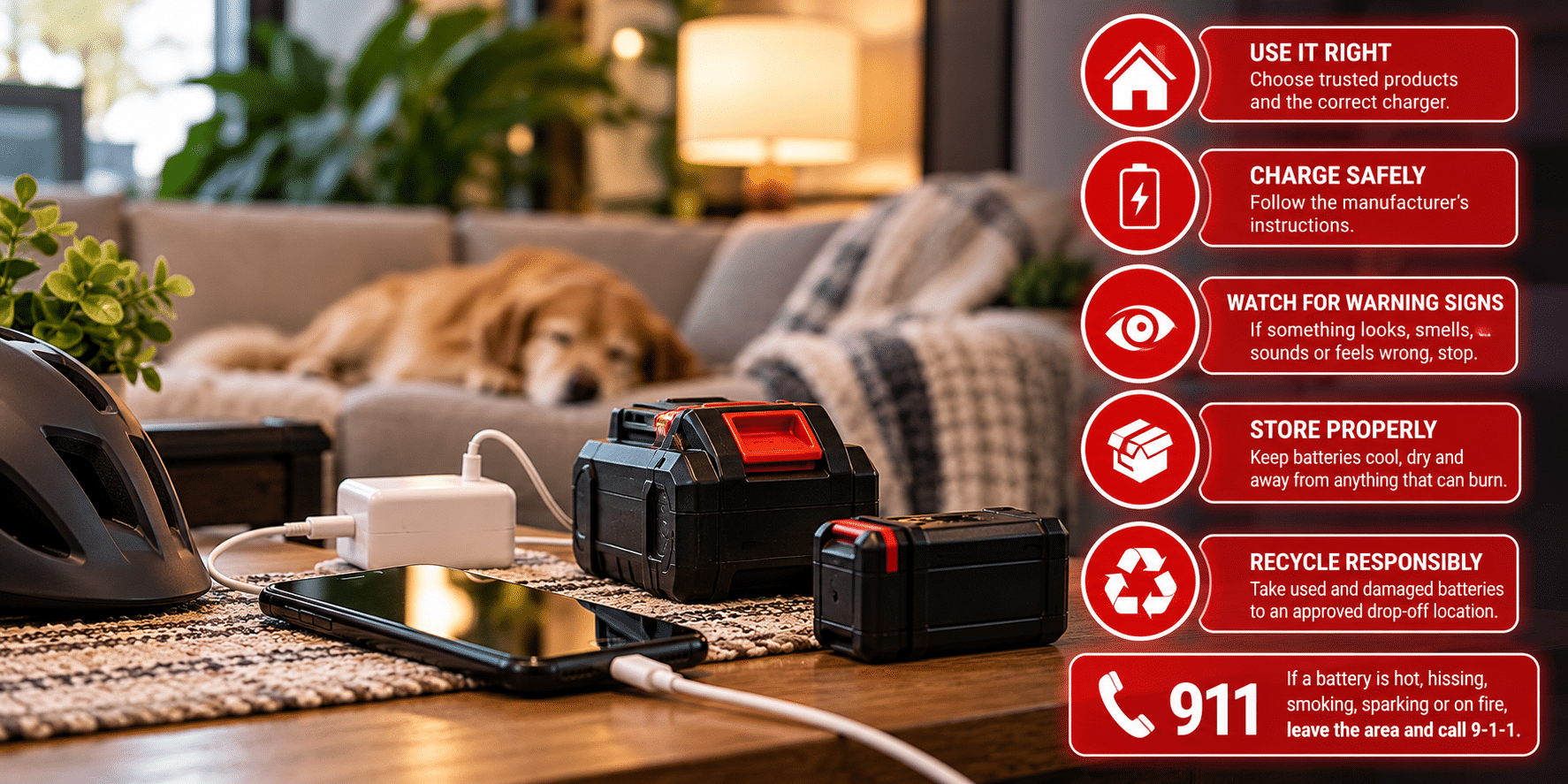
Choose trusted products and use the correct battery and charger for the device.
Charge on a hard, clear surface while you are awake, and keep batteries away from heat and anything that can burn.
Keep batteries out of household garbage and regular recycling. Take intact batteries to an approved collection location.