
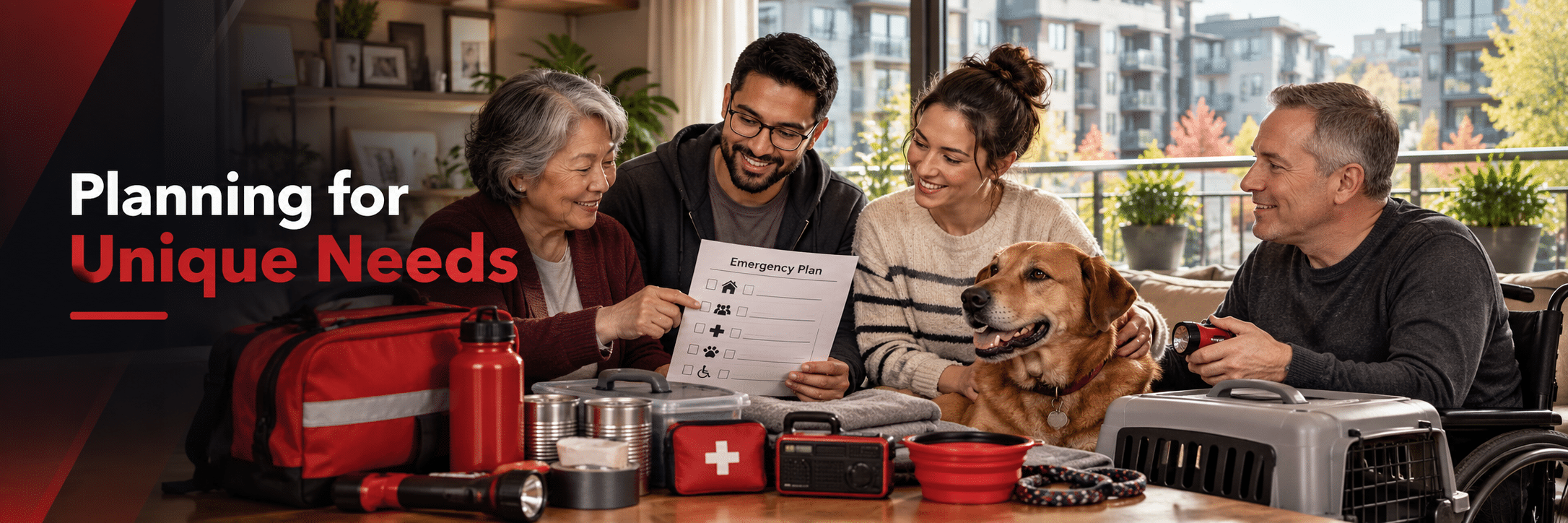
Build a Plan That Works for Your Household
Everyone brings different strengths, responsibilities and needs to an emergency. A good plan should reflect the people, pets, supports and living arrangements that are part of your everyday life.
Consider where you may need additional help, where you could help someone else and what could become more difficult if transportation, power, communication or regular services were disrupted.
The resources below can help you adapt your emergency plan to fit your household and circumstances.
Choose the topics that apply to you

Older Adults
Emergency planning should reflect your individual needs. Consider medications, mobility, medical equipment, home hazards and the people you may rely on for support during an emergency.
Disabilities & Support Needs
Medical, physical or cognitive needs can affect how someone responds during an emergency. Plan ahead for communication, mobility, assistive equipment, medications and the people who may provide support.
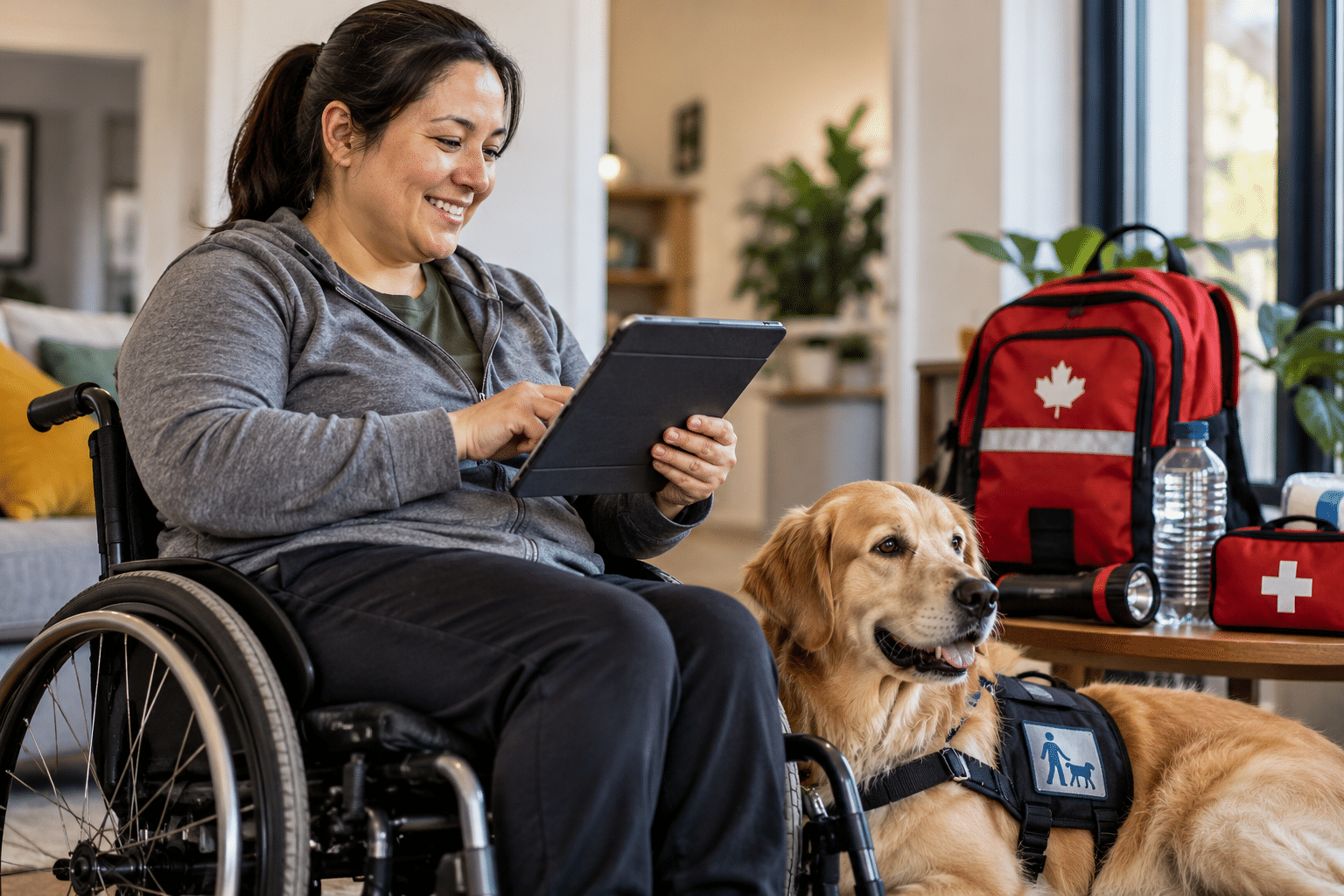

Pets
Pets are part of the household too. Your emergency plan should include the food, water, medications, carriers, leashes and records your pet may need if you have to leave home quickly or stay away longer than expected.
Preparedness on a Budget
Being prepared does not have to be expensive. Many important steps are free, and you may already have much of what you need at home. Start with the essentials and build your emergency supplies gradually as your budget allows.


Apartments & Townhouses
Emergency planning in multi-unit housing works best when neighbours prepare together. Know your building’s emergency procedures, connect with the people around you and consider how shared spaces, limited storage and building access could affect your plan.